
Every child develops at their own pace—but for special kids, the journey of growth and learning often takes a unique path. Early Childhood (EC) development lays the foundation for how a child learns, communicates, and interacts with others throughout life.
Understanding child development helps parents and educators provide the right support at the right time. For children with developmental differences, observation and timely assessment are key to unlocking their full potential.This blog simplifies the stages of early childhood development, explains essential developmental skills, and highlights how observation and early intervention can make a lasting difference.
What Is Early Childhood Development (EC Development)?
Early Childhood Development (ECD) refers to the growth of physical, cognitive, social, emotional, and language skills from birth to around 8 years of age. These years shape a child’s lifelong learning and behavior.
For special kids, EC development may follow a different pace. Some skills may emerge later, while others might progress quickly. Recognizing these unique patterns allows caregivers to provide personalized support.
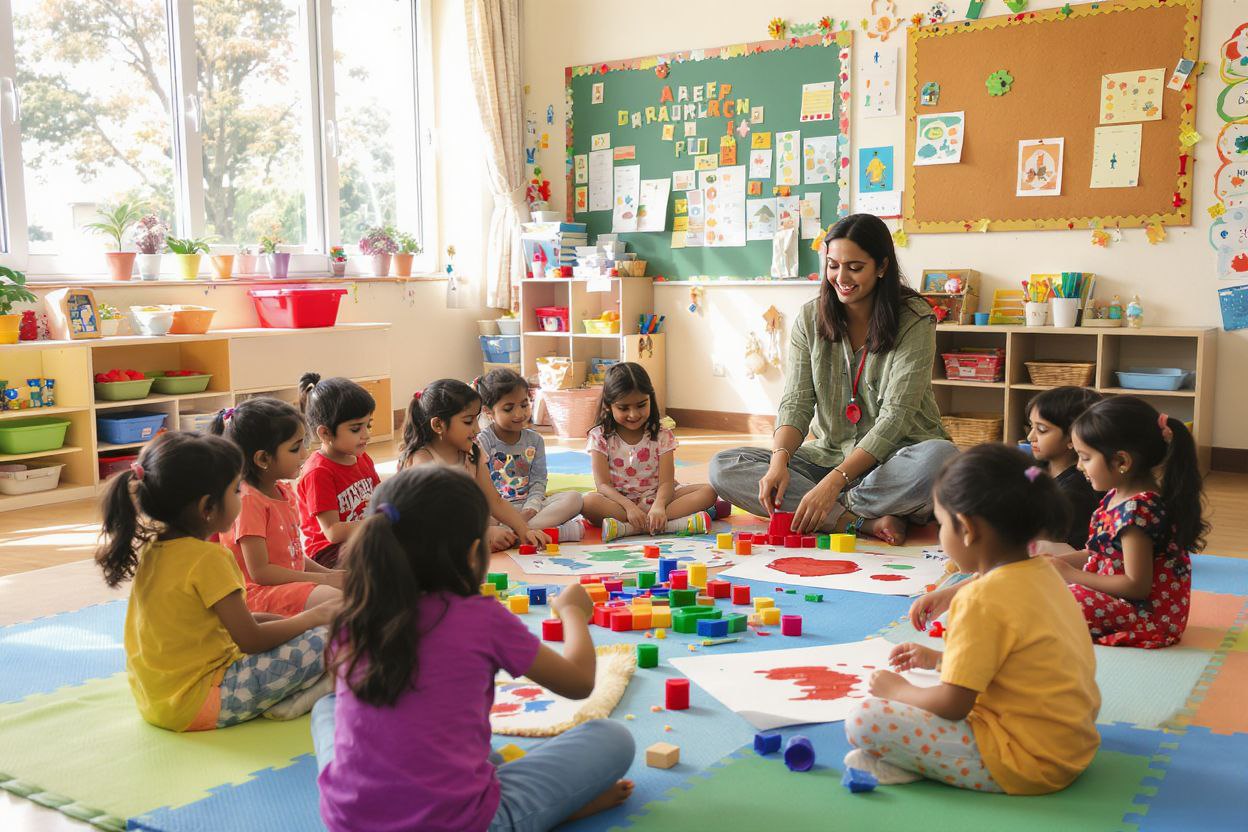
Core Areas of Child Development:
- Physical Development: Building strength, balance, and coordination.
- Cognitive Development: Thinking, learning, problem-solving, and memory.
- Language Development: Understanding and using words to communicate.
- Social & Emotional Development: Expressing feelings, building relationships, and empathy.
- Adaptive or Self-Help Skills: Everyday tasks like dressing, feeding, and using the toilet.
Each area contributes to overall growth and development—and when nurtured early, it helps special kids reach their potential.
Simplified Developmental Stages (Birth to 8 Years)
The following table outlines major Developmental Skills by age group and signs to observe. It’s especially helpful for caregivers of Special Kids to notice early patterns and seek timely assessment.
Age Range | Key Developmental Skills | What to observe in Special Kids | When to seek Assessment |
0-1 year ( Infancy) | Smile,respond to sound,rolls over, start babbling | Notice reaction to faces,sounds and touch | No smiling by 6 months, No babbling by 12 months |
1-2 years (Toddler) | Walks, says simple words, imitates actions | Look for curiosity,response to names,basic play | No walking by 18 months, no words by 2 years |
2-3 years (Early Toddler) | Uses 2 -word phrases, stacks blocks, engages in pretend play | Observe attention and interest in surroundings | No 2- word phrases, limited eye contact,lack of interest in play |
3-5 years (Preschool) | Draws, runs,plays with peers,expresses feelings | Monitor speech clarity and social play | Difficulty communicating, extreme frustration,repetitive behaviors |
5-8 years (Early school) | Reads simple words,understands rules,makes friends | Notice learning pace and focus | Persistent learning delays,social withdrawal, behavioral issues |
Why Observation Matters In Early Childhood Development
Observation is one of the most important ways to understand how a child is growing and learning. For children with special needs, regular observation helps us notice their strengths, small achievements, and areas where they may need more help.
Benefits of Regular Observation
- Understand how your child learns : Every child is different – some learn by seeing, others by listening or moving.
- Notice small milestones: Small achievements like saying a new word or finishing a task are signs of progress.
- Start early support : Observing early helps find challenges and begin therapy or help at the right time.
Keeping simple notes or checklists about a child’s play, talk, and behavior gives a clear picture of their development.
Timely Assessment and Early Intervention
Early assessment helps identify a child’s strengths and areas where they need help.
It’s not about labeling — it’s about giving the right support at the right stage.
• The brain grows fastest in the early years — early help makes a big difference.
•Assessments guide teachers and therapists to create personalized plans.
- Parents learn simple ways to practice skills at home.
“For example, if a 3-year-old isn’t speaking much, a speech therapist can introduce fun activities to build language early.”
FAQs on Early Childhood Development for Special kids
What is Early Childhood Development?
It’s the phase where children learn to express, explore, and understand the world around them building the base for lifelong learning.
Why is it important for special kids?
Early care and guidance help special children communicate better, learn faster, and gain confidence in daily life.
How can parents help?
By spending quality time, encouraging independence, celebrating small wins, and working closely with therapists.
When do I seek help?
If you notice speech, social, or movement delays, early assessment and therapy can make a big difference.
How Pumpkin Ivy Helps Special Kids
At pumpkin ivy, we nurture every child’s potential through:
- Personalized learning Plans
- Play-based therapies
- Support from trained educators and therapists
We believe every child learns differently – and that difference makes them special.